 Arms of Victor Dimitrov Mitev
Arms of Victor Dimitrov Mitev
Blazon
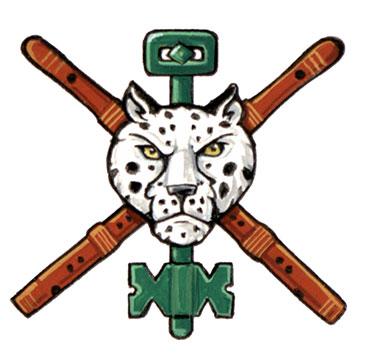
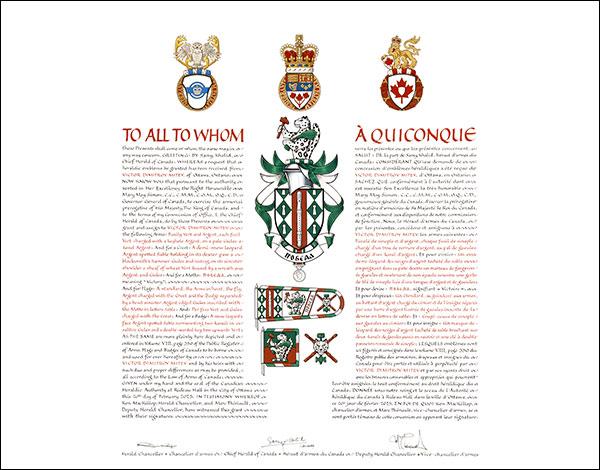
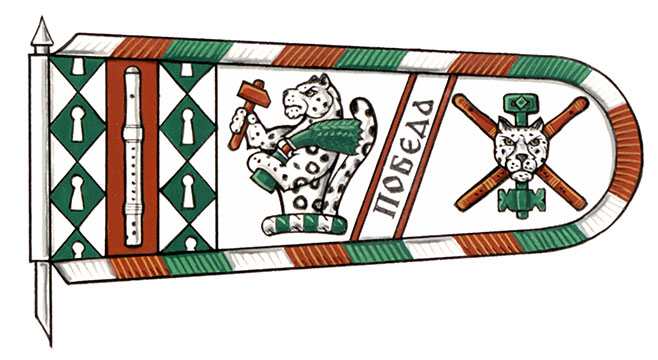
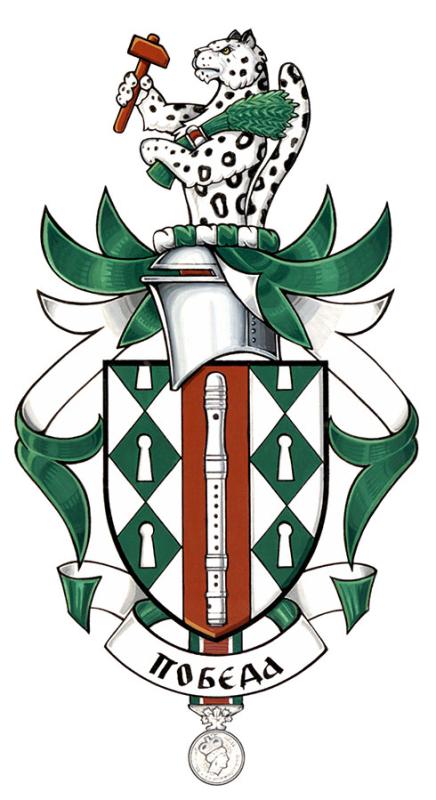
Fusily Vert and Argent, each fusil Vert charged with a keyhole Argent, on a pale Gules a kaval Argent;
Symbolism
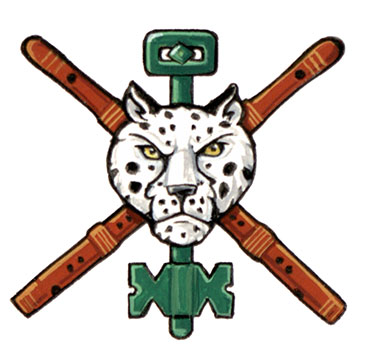
Green, red and white are found in the flag of Bulgaria and in the arms and flag of Stara Zagora, the city in Bulgaria where Mr. Mitev was born. Red and white are the colours of Canada, and green is one of the colours of Ontario. The kaval, a Bulgarian flute, represents Mr. Mitev’s interest in Bulgarian culture and particularly in its folk music. The keyholes refer to his longstanding interest in locks and keys, as well as his career in the field of security, especially in the financial sector. On another level, they allude to the idea of unlocking potential.
Crest of Victor Dimitrov Mitev
Blazon
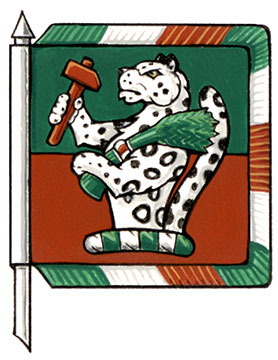
A demi-snow leopard Argent spotted Sable holding in its dexter paw a blacksmith’s hammer Gules and resting on its sinister shoulder a sheaf of wheat Vert bound by a wreath Argent and Gules;
Symbolism
The snow leopard was a symbol used by the Proto-Bulgarians who flourished in the 5th to 7th centuries C.E., and it represents physical strength and victory. The coat of arms of Stara Zagora, Mr. Mitev’s birthplace, features a leopard and a cub, based on a stone carving dating from the 8th or 9th century. The hammer refers to Mr. Mitev’s mother’s family name, which is related to the Bulgarian word for blacksmith. It also embodies the determination and persistence required to deal with life’s challenges, drawing a parallel to a blacksmith hammering iron. The wheat sheaf is associated with Demeter, the Greek goddess of plenty and the source of Mr. Mitev’s middle name and his father’s first name. It also alludes to the family’s agricultural heritage in the Thracian plains region of Bulgaria. The wreath in red and white, the colours of Canada, refer to Mr. Mitev’s chosen country.
Motto of Victor Dimitrov Mitev
Blazon
ПОБЕДА:
Symbolism
This Bulgarian word means “Victory.” It alludes to Mr. Mitev’s first name, Victor, and to his belief in overcoming challenges and obstacles.